From 0 to 100K Sales: What Top-Selling WordPress Themes Do Differently
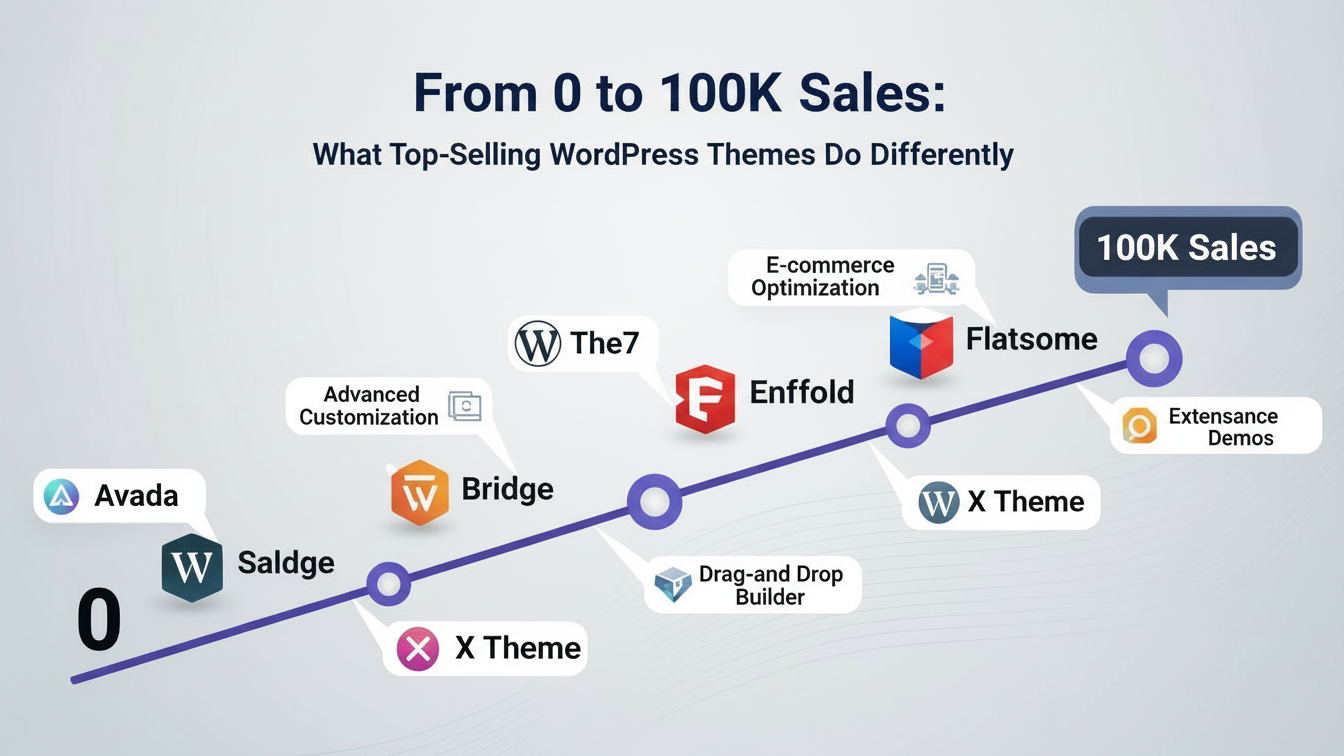
Achieving 100,000 sales in the WordPress theme market (a “Titan” status) is statistically rare. While thousands of themes languish with fewer than 500 sales, a select few—like Avada, Divi, Astra, OceanWP, The7, and Flatsome—dominate the market.
So, what separates a decent theme from a market leader? It is rarely just about “clean code.” It is about product positioning, ecosystem building, and psychology.
Here is what the top-selling WordPress themes do differently to scale from 0 to 100K sales.
1. They Are Platforms, Not Just Themes
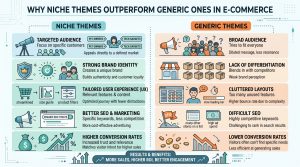
The days of “niche” themes (e.g., “A Theme for Dentists”) dominating the charts are fading. The titans function as website building frameworks.
- The Difference: An average theme offers a static design. A top-tier theme (like Divi or Avada) offers a toolbox that allows a user to build any design.
- The Strategy: They market themselves as the “last theme you will ever need to buy.” This appeals to freelancers and agencies who want to learn one tool and apply it to 50 different client sites.
2. The “Starter Site” Library (Instant Gratification)
The biggest pain point for a WordPress user is the “Empty Canvas Effect”—when you install a theme, and it looks like a broken blog rather than the sleek demo.
- What Top Themes Do: They don’t just offer one demo; they offer 50 to 200+ pre-built websites (Starter Templates) that can be imported with one click.
- Why It Works:
- Astra and OceanWP mastered this. They provide ready-made sites for plumbers, lawyers, gyms, and tech startups.
- This converts the sale from “I am buying a tool” to “I am buying a finished website.”
3. Builder Agnosticism (or Dominance)
Top themes pick a side in the Page Builder war and go all-in.
- The “Integrated” Route: Themes like Avada (Fusion Builder) and Divi (Divi Builder) bake the builder into the theme. This creates lock-in (you can’t leave without breaking the site), but it offers a tightly curated, glitch-free experience.
- The “Agnostic” Route: Themes like Astra and GeneratePress realized they couldn’t beat Elementor or Beaver Builder. Instead, they optimized their code to be the best canvas for those builders. They market themselves as “The Best Theme for Elementor.”
4. Performance as a Marketing Hook
In the early 2010s, “features” sold themes. Today, “speed” sells themes. With Google’s Core Web Vitals becoming a ranking factor, bloat is the enemy.
- The Shift: Themes like GeneratePress and Astra rose to power by advertising their weight (e.g., “Less than 50KB”).
- The Tactic: They prove they don’t use jQuery, they load fast, and they score 100/100 on Google PageSpeed Insights out of the box. This acts as a massive differentiator against older, bloated competitors.
5. The Affiliate Army
You cannot get to 100K sales on organic SEO alone. You need other people to sell your product for you.
- What They Do Differently: Top themes offer aggressive affiliate commissions (often 30% to 50%).
- The Result: Every “Best WordPress Themes for 2024” listicle, every YouTuber, and every course creator recommends these themes. They aren’t necessarily recommending them because they are the absolute best, but because the affiliate ecosystem supports their content business.
6. “Freemium” Funnels
Themes like Astra, OceanWP, and Kadence rewrote the playbook by launching for free on the WordPress.org repository first.
- The Funnel:
- Get the numbers: Get 1 million+ active installs on the free version.
- Earn trust: Prove the theme is reliable and fast.
- The Upsell: Lock specific “Pro” features (e.g., sticky headers, WooCommerce customizations, white-labeling) behind a premium plugin.
- It is easier to upsell a happy free user than to convince a cold lead to pay $60 upfront.
7. Support is Treated as a Feature
In the WordPress space, things break. Plugins conflict. Users make mistakes.
- The Difference: Small theme shops treat support as a burden. Top sellers treat support as a retention strategy.
- Evidence: Look at The7 or Flatsome on ThemeForest. Their comment sections are active, and their support ratings are usually 4.5/5 or higher.
- Community: They build Facebook Groups (e.g., the Divi community) where users help each other, reducing the support load on the developers while building a “cult” following.
8. Deep WooCommerce Integration
E-commerce is the most lucrative segment of the web. A generic blog theme cannot compete here.
- The Strategy: Themes like Flatsome focused entirely on WooCommerce.
- The Features: They don’t just “support” Woo; they add features that usually require expensive plugins, such as:
- Off-canvas cart drawers.
- Product quick views.
- Wishlists.
- Custom checkout designs.
- By bundling these features, the theme saves the user money on extra plugins, justifying the theme price.
9. Adaptability (Surviving the Gutenberg Shift)
Many top-selling themes from 2013 are dead today because they didn’t adapt to WordPress 5.0 (Gutenberg/Block Editor).
- Resilience: The themes that reached 100K+ sales pivoted. They made their themes compatible with Blocks. They are currently adapting to Full Site Editing (FSE). They release updates not just to fix bugs, but to stay ahead of WordPress core changes.
Summary: The 100K Formula
If you want to replicate their success, the formula is:
- Versatility: Build a framework, not a static design.
- Usability: Include dozens of 1-click starter sites.
- Speed: Optimize for Core Web Vitals.
- Distribution: Build a massive affiliate network or use the Free repository as a lead magnet.
- Ecosystem: Create a community that makes it hard for users to leave.